Walk through any Indian lane in the days before Diwali and you will spot it: a bright pattern of colour right at the doorstep, usually made by someone who woke up early to finish it before the first guest arrived. That pattern is rangoli. It is one of the oldest and most loved folk arts in India, and it is still going strong in homes, offices, temples and apartment societies.
If you have ever wondered what rangoli really means, where it came from, or how to start making your own, this guide explains it in plain words. At Cock Colours, we have been part of Indian celebrations for years, so we have seen how this tradition keeps changing while staying true to its roots.
What Is Rangoli?
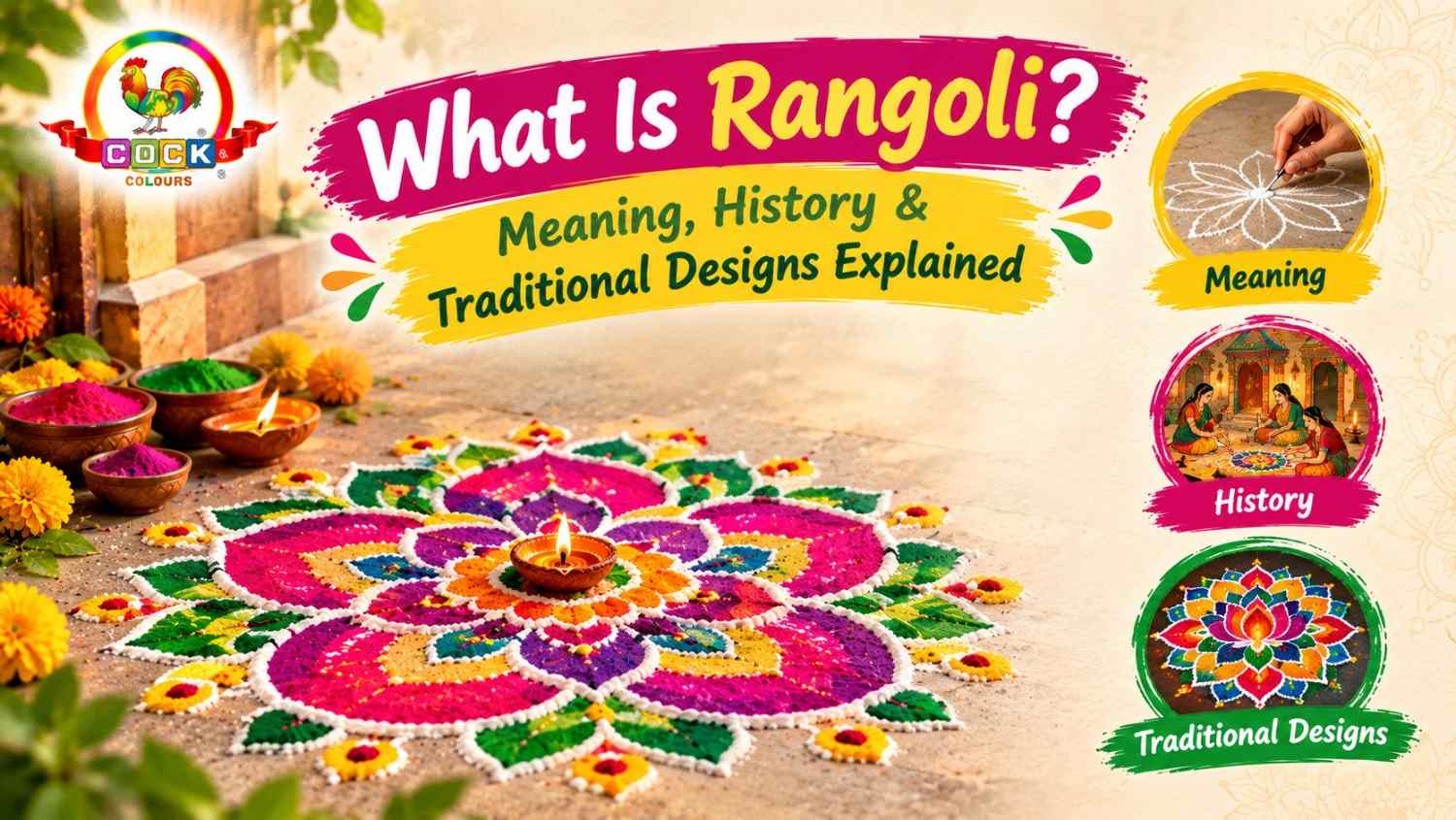
Rangoli is a decorative art made on the floor, usually at the entrance of a home or in the courtyard. It is created with coloured powder, rice flour, flower petals, or coloured sand. The word comes from the Sanskrit rangavalli, which roughly means "rows of colour".
The patterns can be very simple, like a few dots joined by lines, or quite detailed, like a full peacock with its tail spread out. What matters is the intention behind it. Rangoli is a way of saying "you are welcome here."
Different states have their own names and styles:
- Kolam in Tamil Nadu, often drawn with rice flour
- Alpana in West Bengal, painted with rice paste
- Muggu in Andhra Pradesh and Telangana
- Pookalam in Kerala, made with fresh flowers during Onam
- Aripan in Bihar and Mandana in Rajasthan
The Meaning Behind Rangoli
Rangoli is considered auspicious. Many families believe a fresh rangoli at the door invites Goddess Lakshmi into the house, which is why it is drawn every morning in many homes, and more elaborately during Diwali.
There is a practical, gentle side too. Traditionally, rice flour was used so that ants and small birds could eat it. It was a small daily act of sharing space with other living things.
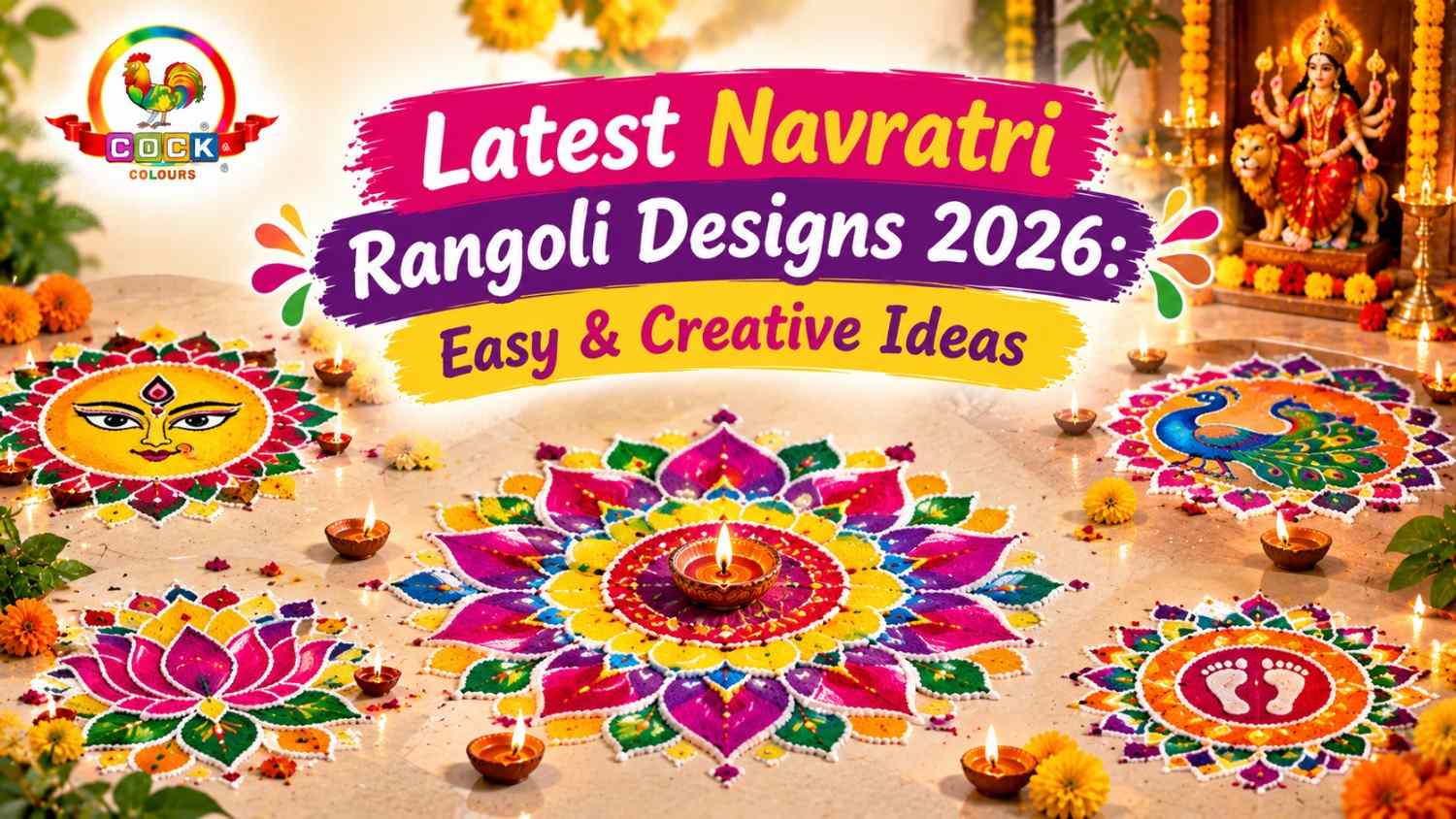
Common symbols carry their own meaning. A lotus stands for purity and prosperity. A diya stands for light winning over darkness. A kalash stands for abundance. Peacocks, fish, mango leaves and footprints of Lakshmi are also popular, each tied to luck and happiness.
A Short History of Rangoli
Nobody can point to an exact starting date, mainly because rangoli was never meant to last. It was drawn fresh, walked over, and redrawn the next day. Knowledge passed from mothers to daughters, from neighbours to neighbours, and mostly by watching rather than writing.
Floor decoration is mentioned in old Indian traditions and appears in ritual practice for centuries. One popular legend says that a king's priest was asked to paint a portrait of the king's late son on the floor, and the art was born from that story. Whether or not you take the legend literally, it shows how deeply the idea of drawing on the floor is woven into Indian culture.
Over time, rangoli moved from kitchen-floor flour designs to coloured powders, and today to modern tools like stencils and squeeze bottles. The spirit is the same. Only the convenience has changed.
Traditional Rangoli Designs You Should Know
If you are looking for ideas, these are the classic Rangoli Designs that families keep returning to:
- Dot-based (sikku) designs: You place a grid of dots, then join them with continuous lines. Great for learning symmetry.
- Freehand designs: Flowing curves, vines and paisley shapes drawn without a grid.
- Floral rangoli: Lotus, marigold and rose patterns, made with powder or real petals.
- Diya rangoli: Rows of small lamps, usually around the border for Diwali.
- Peacock rangoli: A bold favourite with a feather fan in blue, green and gold.
- Geometric rangoli: Stars, squares and triangles in bright, contrasting colours.
Start with a small circle or square design. Once your hands get used to the flow of the powder, bigger patterns feel much easier.
What Do You Need to Make Rangoli?
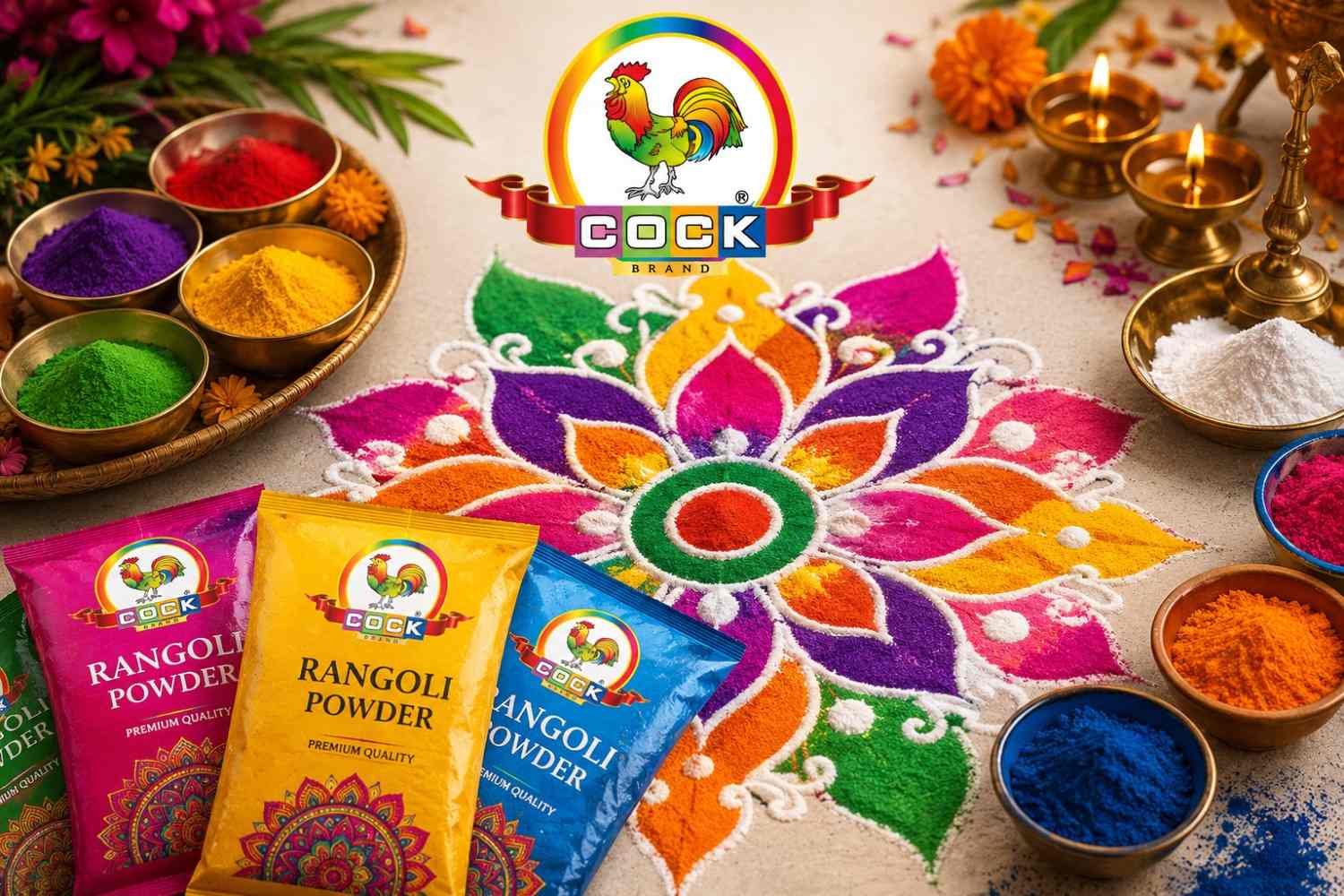
Traditionally, rice flour was enough. These days most people use Rangoli Powder because the colours are rich, fine and easy to spread. A pack of pouches lets you keep several shades ready, so you do not have to mix on the spot.
A very useful shade is Rangoli Powder White. Artists use it to draw the first outline and base shapes, because white shows up clearly on dark and light floors alike. It also makes every other colour look brighter once placed beside it. If you are new to rangoli, sketch with white first, then fill in the colours.
For smoother work, you can also use:
- A Rangoli Easy Bottle set with a nozzle, which gives thin and steady lines
- A Rangoli Neon pack if you like glowing, high-impact shades
- Stencils for perfect shapes
- A soft brush to clean stray powder
ReadyMade Rangoli: Quick Option for Busy Days
Not everyone has two free hours before guests arrive. That is where ReadyMade Rangoli helps. Instead of drawing every line yourself, you use a stencil, mat or sticker and fill it with colour. The shape comes out neat on the first try.
The Magic Rangoli Maker kit from Cock Colours comes with four stencils and four assorted colours, so even kids and first-timers can finish a pattern in minutes.
That said, many people still enjoy the freehand route for the personal touch. A good mix is to use a readymade stencil for the centre and add your own border around it.
How to Make a Simple Rangoli: Step by Step
- Clean the floor. It should be dry and free of dust so the powder settles evenly.
- Draw the outline. Use white powder or chalk to sketch the main shape. Keep it light.
- Fill the big areas first. Pinch the powder between your thumb and finger and let it fall slowly.
- Add detail. Switch to a bottle or nozzle for thin lines, petals and borders.
- Finish with a border. A white or gold edge makes the whole design look sharper.
- Place diyas or flowers. This is the final touch that makes it feel complete.
A small tip: work from the centre outward, and keep a damp cloth nearby to fix mistakes quickly.
Ready to try? Browse the full Cock Colours rangoli collection for powder pouches, easy bottles, neon colours and stencil kits. Want to know more about us? Visit our About Us page.
Why Rangoli Still Matters Today
In a world of screens and quick plans, rangoli asks you to slow down for twenty minutes and make something with your hands. Children learn patience, elders share old patterns, and neighbours stop by to compare designs. It is a small ritual that brings people together, which is probably why it has survived for so long.
Whether you follow a strict traditional pattern or try something modern with neon shades and stencils, you are keeping a living art form going. And that is something worth doing at every festival.
Frequently Asked Questions
What is rangoli in simple words?
Rangoli is a colourful pattern made on the floor, usually at the entrance of a home, to welcome guests and good luck. Cock Colours makes powders and kits that make it easy.
Which festivals use rangoli?
Diwali is the biggest one, but rangoli is also made for Pongal, Onam, Navratri, weddings and housewarmings. Cock Colours rangoli colours suit all of them.
What is Rangoli Powder White used for?
It is used to draw outlines and base shapes, and it makes other colours stand out. You can pair it with Cock Colours rangoli powder shades.
Is ReadyMade Rangoli a good option for beginners?
Yes. Stencil and bottle-based kits like the Cock Colours Magic Rangoli Maker give neat results without any drawing practice.
How long does a powdered rangoli last?
Indoors, it can stay for several days if the area is dry and not walked on. Cock Colours powder works best when applied on a clean, dry floor.
Where can I buy rangoli colours online?
You can order rangoli powder, easy bottles, neon colours and stencil kits directly from the Cock Colours rangoli collection.