HOW COCK COLOURS CRAFTS ORGANIC GULAL POWDER FOR A CHEMICAL-FREE HOLI
August 17, 2026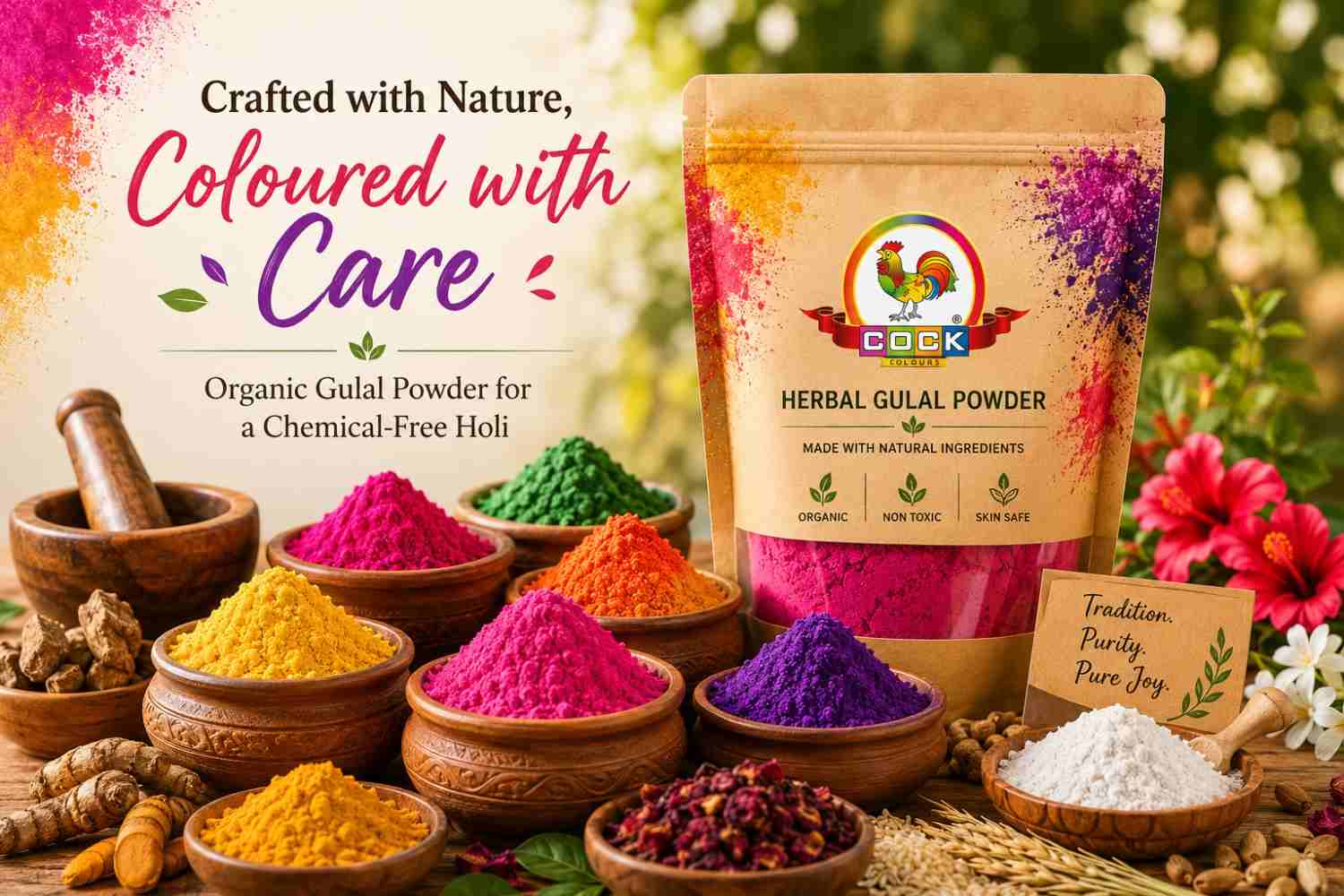
There's a particular moment every Holi where someone rubs a handful of colour onto your cheeks, and depending on what that colour is made of, it either feels like a warm, textured powder or it feels like something faintly stinging that you want to wash off immediately. Most people have experienced both at some point, usually without realising the difference comes down to one thing: what's actually inside the gulal powder they're using.
Gulal has been part of Holi for generations, long before spray cans and synthetic dyes entered the picture. Somewhere along the way, mass production took over and a lot of what's sold today prioritises bright colour over what's safe to put on skin. Brands like Cock Colours have been trying to pull the tradition back to where it started — natural, skin-safe, and genuinely chemical-free. Here's a closer look at how that actually works.
What Is Gulal Powder Made Of?
At its core, gulal is a combination of a base powder and a colourant. Traditionally, the base was arrowroot powder, corn starch, or rice flour something light, fine, and safe to handle. The colour came from natural sources: turmeric for yellow, beetroot or hibiscus for red and pink, indigo or spinach extract for green, and sandalwood powder for a more muted, earthy tone.
Over the years, cheaper commercial gulal shifted to using synthetic dyes and sometimes even industrial fillers like silica to bulk up volume without adding cost. This is where a lot of the skin and eye issues associated with Holi actually come from.
Cock Colours has gone back to focusing on genuine gulal powder ingredients, a clean starch base combined with natural, plant-derived colourants. It's a more involved process than just mixing synthetic dye into starch, but it's also the reason the final product feels noticeably softer and gentler when it's actually applied to skin.
How to Make Gulal Powder?
Understanding how gulal is made helps explain why the quality varies so much between brands. The basic process, done properly, looks something like this:
Preparing the base with arrowroot powder, corn starch, or rice flour is sifted finely to remove any coarse particles, since a smooth texture matters both for how the gulal feels and how evenly it spreads.
Extracting natural colour ingredients like turmeric, beetroot, or hibiscus are dried and ground into a fine pigment, or in some cases used as a natural extract that's blended directly into the base powder.
Mixing and blending the colourant is combined with the starch base in carefully measured proportions, enough to give a vibrant, consistent colour without overwhelming the texture of the powder.
Drying and sieving the mixture is dried thoroughly to prevent clumping, then sieved again to make sure the final gulal powder has that soft, fine consistency people expect.
This process takes longer and costs more than simply mixing synthetic dye into starch, which is exactly why cheap, unbranded gulal tends to cut corners here. Cock Colours sticks closer to this traditional method, which is a big part of why its herbal gulal powder holds up well in terms of both texture and safety.
Is Gulal Powder Safe?
This depends almost entirely on what kind of gulal you're using. Synthetic gulal, especially the cheaper varieties sold loose without any packaging information, often contains heavy metals like lead or chromium, along with industrial dyes that were never intended for direct skin contact. These are usually behind the itching, rashes, and eye irritation people associate with "bad Holi colour."
Non-toxic gulal powder, made from natural starch and plant-based colourants, removes most of this risk. Since the ingredients are things the body already tolerates well, the chances of irritation drop significantly, and even if some powder gets near the eyes accidentally, the reaction tends to be far milder compared to synthetic alternatives.
That said, it's worth doing a quick patch test if you have particularly sensitive skin, since even natural ingredients like turmeric can occasionally cause mild reactions in a small number of people. But for the vast majority of users, a well-made herbal gulal powder is a genuinely safer choice, and it's the standard Cock Colours has built its Holi range around.
What Is the Price of 1 Kg Gulal?
Pricing for gulal powder varies depending on quality, ingredients, and brand reputation. On average, good quality organic or herbal gulal powder is priced somewhere between ₹1600 to ₹2400 per kg, depending on the specific colours, ingredients used, and whether it's a premium blend or a standard festival mix.
This might seem like a wide range, but it usually comes down to what's gone into the product genuine herbal gulal powder using real plant-based colourants and a clean starch base naturally costs more to produce than synthetic gulal mixed with cheap fillers. Cock Colours prices its gulal powder within this range, aiming to stay accessible for families and bulk buyers while still maintaining the quality of ingredients that make it worth choosing over the loose, unbranded gulal sold at roadside stalls closer to Holi.
It's generally a good idea to buy a little ahead of the festival season, since demand and pricing ends to climb sharply in the final week before Holi.
Why the Brand You Choose Actually Matters
With so many gulal options available every Holi season, it's easy to just grab whatever's closest or cheapest. But gulal is one of those products where the difference between brands genuinely shows up on your skin, sometimes within hours of playing Holi.
Cock Colours has focused specifically on keeping its gulal powder ingredients transparent, herbal, and consistent across batches, which matters a lot more than it sounds once you've experienced the difference between a well-made herbal gulal powder and a cheap synthetic one. It's not just about avoiding irritation, it's about the colour feeling the way Holi is supposed to feel, soft and joyful rather than something you're trying to wash off as fast as possible.
Final Thoughts
Gulal is one of the simplest parts of Holi, and yet it's also one of the easiest things to get wrong. Choosing a genuinely organic, non-toxic gulal powder isn't about following a trend, it's about making sure a festival built around joy doesn't leave you dealing with irritated skin or itchy eyes afterward. With brands like Cock Colours focusing on real ingredients and a proper manufacturing process, playing it safe this Holi doesn't mean giving up on colour. It just means choosing gulal that's made the way it always should have been.
FAQs
1. What Is Gulal Powder Made Of?
Gulal is typically made from a fine starch base such as corn starch, rice flour, or arrowroot, combined with natural, plant-based colourants.
2. Is Herbal Gulal Safe for Skin?
Yes, well-made herbal gulal made with natural ingredients is generally gentler on skin. A patch test is recommended for people with sensitive skin.
3. How Is Organic Gulal Powder Made?
It is made by preparing and sieving the base, adding natural colours, blending, drying, and sieving the final mixture for a smooth texture.
4. What Colours Are Used in Natural Gulal?
Natural gulal can use ingredients such as turmeric, beetroot, hibiscus, indigo, spinach extract, and sandalwood for different shades.
5. How Much Does 1 Kg of Herbal Gulal Cost?
The price depends on the ingredients and quality. The article states that good-quality herbal or organic gulal can cost around ₹1600–₹2400 per kg.