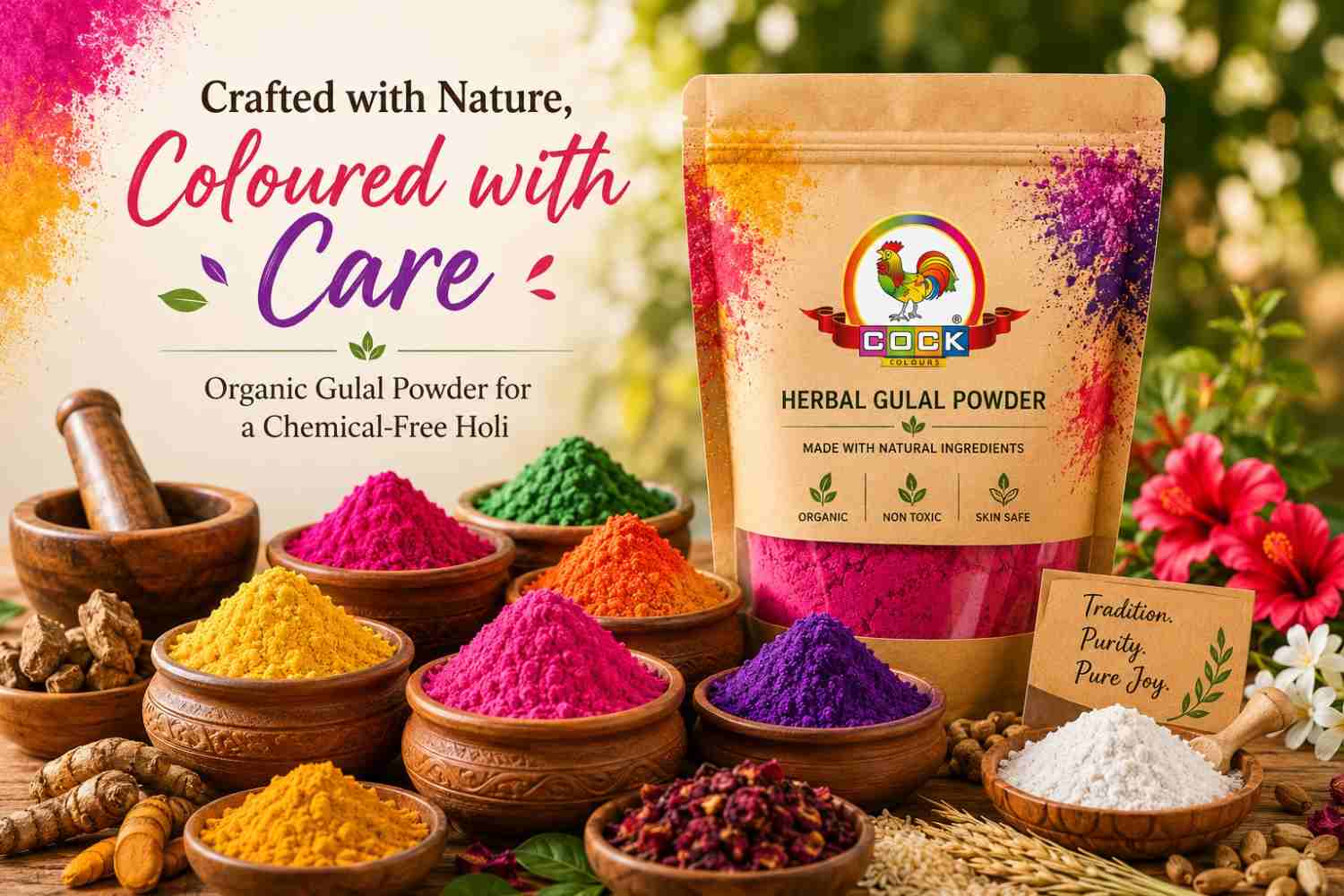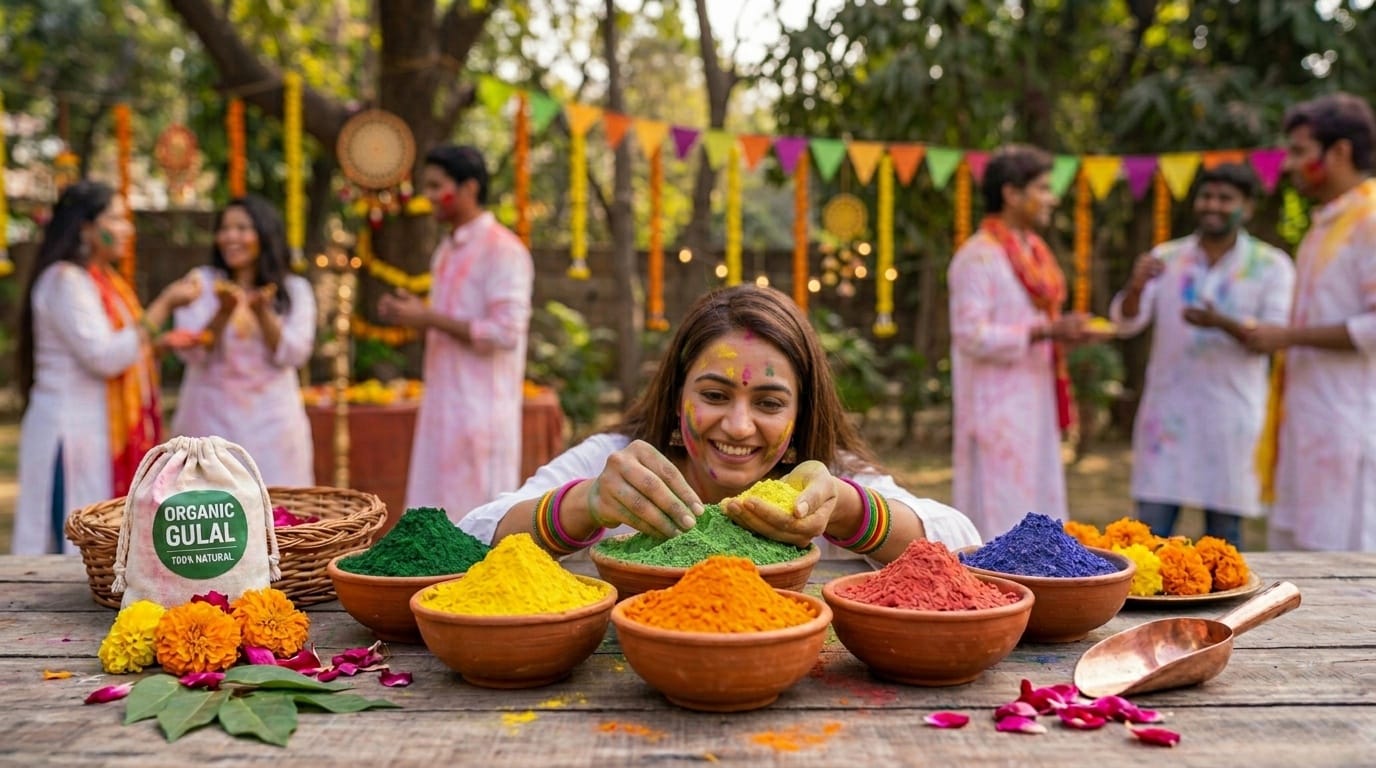
Gulal powder is a fine, dry colour powder used during Holi and in religious rituals across India. Good gulal is made from a starch base and skin-friendly pigments, which is why it feels soft and washes off easily.
Every Holi, someone tears open a packet of gulal, a soft cloud of colour rises, and soon the whole street is pink, yellow and green. But have you ever wondered what is actually inside that packet? A little knowledge about gulal powder helps you choose better and play safer.
At Cock Colours, we have been making colours in Hathras since 1951, so this is a subject close to our hearts. Here is everything you want to know, in plain words.
What Is Gulal Powder?
Gulal powder is the traditional dry colour of Holi. It is light, silky and made to be applied by hand or thrown into the air. You will also see it used as a tilak, offered to deities and spread across temple courtyards during festivals.
The word "gulal" is closely linked with the red-pink shades that people associate with Holi, but today the range goes far beyond that. At Cock Colours alone, the shade library runs past 250 colours. When people say "gulal colour", they usually mean any of these fine dry powder shades used for celebration or worship.
A Short History of Gulal
Gulal has been part of Indian celebrations for centuries. In the old days, it was made at home from flowers, leaves, turmeric, sandalwood and other plant materials. Families dried and ground these ingredients into fine powders, and the result was gentle, fragrant and completely natural.
As Holi grew bigger, factories took over, and some makers chose cheap industrial dyes to cut costs. That is where the skin problems started. The good news is that more families now ask for herbal, non-toxic gulal, which is exactly our focus.
How Is Gulal Colour Made?
Making good gulal powder is part science and part patience. The process usually looks like this:
- A base: Most gulal uses a starch base, such as corn starch, which keeps the powder light and soft on the skin.
- Pigment: Colour is added to the base. In herbal gulal, the colour comes from natural sources like turmeric, beetroot and neem.
- Blending and sieving: The mix is blended until the shade is even, then sieved so there are no lumps or gritty bits.
- Testing: Each batch is checked for consistency, brightness and safety before it is packed.
Herbal Gulal vs Chemical Colour
This is the question we hear most often. Chemical colours can contain heavy metals and synthetic dyes, which may cause itching, rashes and eye irritation. Those risks are higher for children and for people with sensitive skin.
Herbal gulal colour avoids those problems. It is made with plant-based ingredients and is free from harmful chemicals, so the chance of a reaction is much lower. It is also kinder to the environment, because it breaks down more easily after the celebration is over.
Some people worry that herbal colour looks dull, but with the right formulation the shades stay bright all day. See the full range on our Gulal Powder collection.
Gulal Powder vs Gulal Spray
You may have noticed gulal spray showing up in stores and online. So how is it different from regular gulal powder?
Gulal powder is dry. You apply it with your hands, throw it, or use it as a tilak. It gives the classic Holi look, with clouds of colour in the air and handfuls of colour on cheeks. It also works well for pujas and decorations.
Gulal spray is a liquid form that comes in a can or bottle. It gets wet and dries quickly, so there is less dust in the air. Some people like it for outdoor play or for use around small spaces. If you are unsure about a spray, read the label carefully, check the ingredients and do a small patch test first.
Neither is better in every situation, and many families keep both. To browse what is available, visit the Gulal page.
How to Choose Good Gulal
Standing in front of dozens of packets can be confusing. Here is a simple checklist:
- Check the claims: Look for words like herbal, non-toxic and skin-friendly, and make sure the brand actually explains its ingredients.
- Feel the texture: Good gulal powder is fine and smooth. Gritty or oily powder is a warning sign.
- Trust the maker: A brand with decades of experience and proper quality checks is a safer bet than an unknown seller.
Buying from the maker directly also helps. When you order from the Cock Colours online store, you get genuine packs, clear product details and the option to buy single packs or in bulk.
How to Play Holi Safely With Gulal
A few small habits can make the day much more comfortable:
- Prepare your skin and hair. Moisturise your skin and oil your hair before heading out. It creates a light barrier and makes washing easier later.
- Protect your eyes. Avoid applying gulal near the eyes, nose and mouth. Sunglasses help if you are in a crowd.
- Be gentle with children. Apply gulal softly on their cheeks and arms, and never throw it at their faces.
- Keep water handy. If any powder gets into the eyes, rinse with clean water right away.
How to Wash Off Gulal Colour
The cleanup does not have to be a battle. Start by shaking or brushing off the dry powder outdoors before you step inside. Then wash your face and body with mild soap and lukewarm water. Avoid scrubbing hard, because it can irritate your skin. A little coconut or almond oil on stubborn patches helps loosen the colour before washing.
For clothes, shake out the loose powder and put them through a normal wash.
Gulal Beyond Holi
Gulal is not only about Holi. Across India, it plays a role in many traditions. Devotees use it as tilak and as an offering during pujas and temple festivals. Because of this, we offer Temple Gulal made for worship, alongside our festival range.
Buying in bulk for events or export? Our team can help through the exports page or the contact page.
Why Choose Cock Colours for Gulal?
We started making colours in 1951 and have grown into one of India's best-known Holi colour makers. Today, you can find us at more than 10,000 dealers and distributors, and our products reach customers in many countries.
Our gulal is made with herbal ingredients like turmeric, neem and beetroot, and it avoids heavy metals and artificial dyes. Every batch goes through quality checks, so you can focus on the fun instead of the worry.
Frequently Asked Questions
What is gulal powder made of?
Gulal powder is usually a starch base mixed with pigments. Cock Colours uses herbal, skin-friendly ingredients and avoids heavy metals and artificial dyes.
Is gulal colour safe for skin?
Good-quality gulal colour is safe for most skin types. Cock Colours make non-toxic gulal, but always keep it away from eyes and mouth.
What is the difference between gulal powder and gulal spray?
Gulal powder is dry and thrown or applied by hand. Gulal spray is a liquid form that goes wet and dries quickly.
How do I remove gulal colour from skin and clothes?
Brush off the dry powder, then wash with mild soap and lukewarm water. Cock Colours gulal is made to wash off easily.
Where can I buy gulal powder online?
You can order directly from the Cock Colours Gulal collection, in single packs or in bulk.
Can gulal be used for puja?
Yes, gulal is used in many rituals. Cock Colours also offers Temple Gulal made for puja and daily worship.
Final Thoughts
Gulal powder is more than a Holi tradition. It is part of how India celebrates, worships and comes together, and the right gulal colour makes the day brighter and safer for everyone.
Look for herbal, non-toxic ingredients, trust an experienced maker and keep a few safety habits in mind. Ready to pick your shades? Explore the full Cock Colours Gulal Powder range and make this celebration one to remember.