Rangoli is an important part of Indian festivals, especially during Diwali, Holi and other celebrations. Bright colours bring life to every design, but sometimes it is the subtle shades like brown that add depth and beauty to a rangoli pattern. Many people often wonder how to make brown colour in rangoli using simple and safe methods. Brown is a unique colour that represents earth, warmth, and balance. It is perfect for creating outlines, shading, or adding natural elements like trees, soil, and traditional patterns in rangoli. Instead of depending only on ready-made powders, you can easily prepare brown colour rangoli at home using natural ingredients.
In this blog, we will explore simple ways to make brown rangoli colour, tips to use it effectively, and how you can combine it with other shades to create beautiful designs.
Why Brown Colour is Important in Rangoli
Most people focus on bright colours like red, yellow, pink, and green while making rangoli. However, brown plays a very important role in enhancing the overall look.
It helps in creating contrast and makes other colours stand out. For example, when you use brown as a base or outline, bright shades appear more vibrant. It also gives a realistic touch to nature-inspired designs like leaves, soil, or wooden textures.
A well-balanced rangoli always includes both bright and neutral shades. That is why learning how to make brown colour in rangoli is useful for anyone who enjoys festive decoration.
How to Make Brown Colour in Rangoli at Home
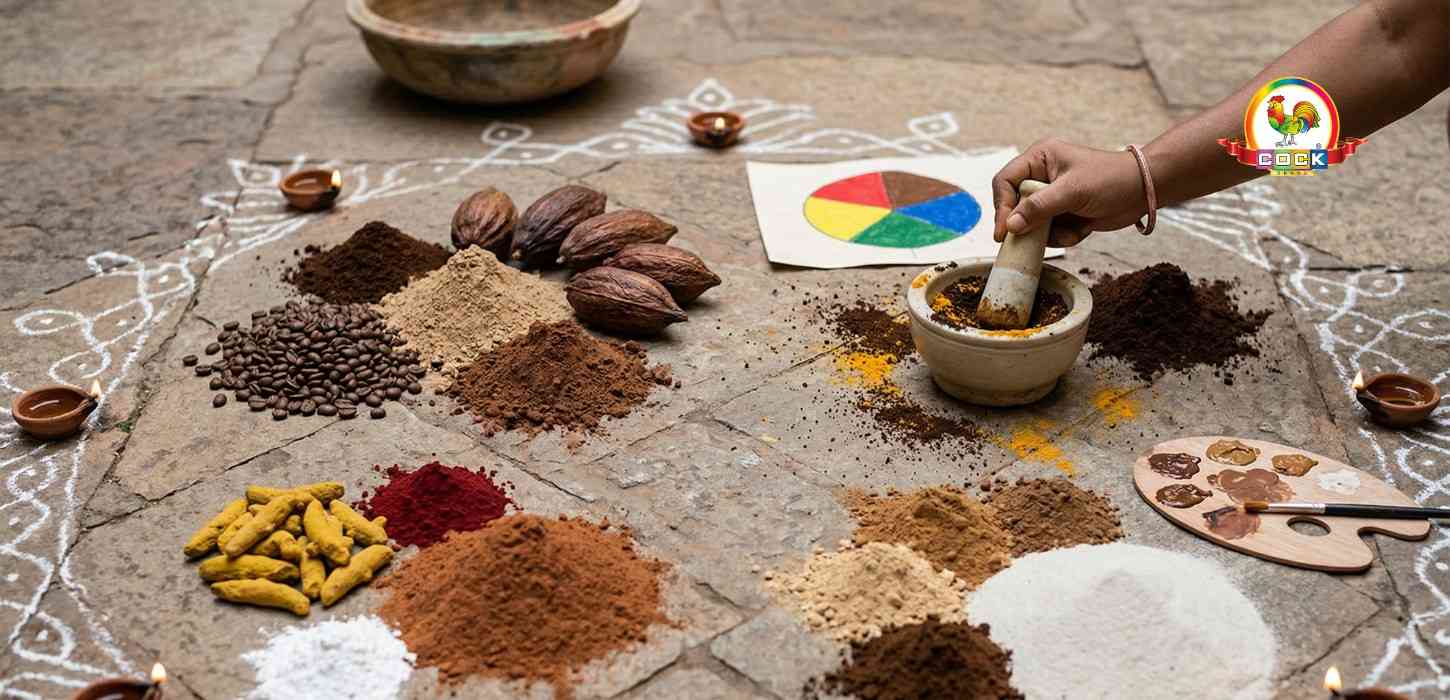
Making brown colour at home is simple and does not require expensive materials. You can use common kitchen ingredients or natural powders to achieve the desired shade.
1. Mixing Primary Colours
One of the easiest ways to create brown is by mixing basic colours.
Mix red and green powder in equal amounts
Add a little yellow if needed to adjust the tone
Blend properly to get a smooth brown shade
This method is quick and works well if you already have coloured powders at home.
2. Using Coffee Powder
Coffee is a great natural option for making brown rangoli colour.
Take finely ground coffee powder
Mix it with a little rice flour or plain rangoli powder
Blend well to get a lighter shade
Coffee gives a rich and earthy tone, making it perfect for natural-looking designs.
3. Using Tea Powder
Tea powder is another easy way to prepare brown colour.
Dry used tea leaves completely
Grind them into a fine powder
Mix with white base powder for smooth texture
This method creates a soft brown shade suitable for shading and filling.
4. Using Cocoa Powder
Cocoa powder can also be used to create a deep brown colour.
Mix cocoa powder with plain rangoli base
Adjust the quantity to get the desired shade
This method gives a smooth and even colour, ideal for detailed designs.
5. Mixing Natural Earth Powder
Clean and dry soil can be used as a natural brown colour.
Sieve the soil to remove impurities
Mix with fine powder for better texture
This gives an authentic earthy look to your rangoli.
Prefer a ready-made brown?
Mixing your own works well, but the shade shifts between batches and coffee or soil can stain a finished floor. For a brown that stays consistent and sieves smooth, the Murga Rangoli Powder Pouch carries ten ready shades in one pack — enough for a full Diwali rangoli with no mixing.
Tips to Get the Perfect Brown Colour Rangoli
Making the colour is just one part. Using it correctly is equally important.
Always mix powders properly to avoid uneven shades
Use a fine sieve to get smooth texture
Combine brown with bright colours for better contrast
Test the shade before using it in your final design
A well-prepared brown colour rangoli can make your design look more professional and attractive.
How to Use Brown Colour in Rangoli Designs
Brown is a versatile colour and can be used in many creative ways.
For Outlines
Use brown to outline your rangoli design. It gives a soft and elegant finish compared to black.
For Nature Themes
Brown is perfect for creating tree trunks, soil, and natural elements. It adds realism to your design.
For Shading
You can use brown for shading and blending with other colours to create depth.
For Traditional Patterns
Brown works beautifully in traditional rangoli designs where earthy tones are preferred.
How to Make Holi Colours at Home
While preparing rangoli colours, many people also look for safe ways to make Holi colours. Learning how to make holi colours at home helps you celebrate in a skin-friendly and eco-friendly way.
You can use natural ingredients like:
Turmeric for yellow
Beetroot powder for pink
Spinach powder for green
Coffee or tea for brown
These colours are safe, easy to wash, and gentle on the skin. They are also better for the environment compared to chemical-based colours.
Benefits of Using Homemade Rangoli Colours
Making colours at home has many advantages.
Safe for Skin
Natural ingredients do not cause irritation or allergies.
Eco Friendly
They do not harm the environment and are biodegradable.
Cost Effective
You can create colours using items already available at home.
Creative Satisfaction
Making your own colours adds a personal touch to your rangoli.
Common Mistakes to Avoid
While preparing brown rangoli colour, avoid these mistakes:
Do not use wet ingredients as they can spoil the powder
Avoid coarse particles that can ruin the design
Do not mix too many colours as it may create dull shades
Always store the powder in a dry place
Paying attention to these details helps in achieving the best results.
Making Rangoli More Attractive
To make your rangoli stand out, focus on colour balance and design.
Combine brown with bright shades like yellow and red
Use symmetry and patterns for a neat look
Add small details to enhance the design
Keep the base clean for better presentation
A thoughtful combination of colours can turn a simple rangoli into a beautiful artwork.
FAQ
How to make brown colour in rangoli easily
You can mix red and green powder or use natural ingredients like coffee, tea, or cocoa powder to create brown colour easily.
Can I use kitchen ingredients for rangoli colours
Yes, ingredients like coffee, tea, turmeric, and beetroot are commonly used to make safe and natural colours.
Is brown colour important in rangoli
Yes, brown helps in creating outlines, shading, and natural elements, making the design more balanced and attractive.
How to make holi colours at home safely
Use natural ingredients like turmeric, beetroot, and spinach. Avoid chemical colours for a safe celebration.
How to store homemade rangoli colours
Keep them in airtight containers in a dry place to maintain their texture and quality.
Conclusion
Rangoli is a beautiful way to express creativity and celebrate traditions. Learning how to make brown colour in rangoli adds more depth and flexibility to your designs. With simple ingredients and a little effort, you can create natural and attractive shades at home.
Using homemade colours not only makes your rangoli unique but also keeps it safe and eco friendly. Whether you are preparing for Holi or any festive occasion, natural colours always bring a special charm. For those who prefer ready-made options with consistent quality and vibrant shades, cock colours offer a reliable range of festive powders. With a focus on smooth texture and rich colour tones, Cock Colours helps you create stunning rangoli designs with ease.
Many households trust Cock Colours for their festive needs because of its quality and ease of use. Whether you are making traditional patterns or modern designs, our rangoli range gives a beautiful finish every time. Celebrate this Diwali with colours you can rely on.