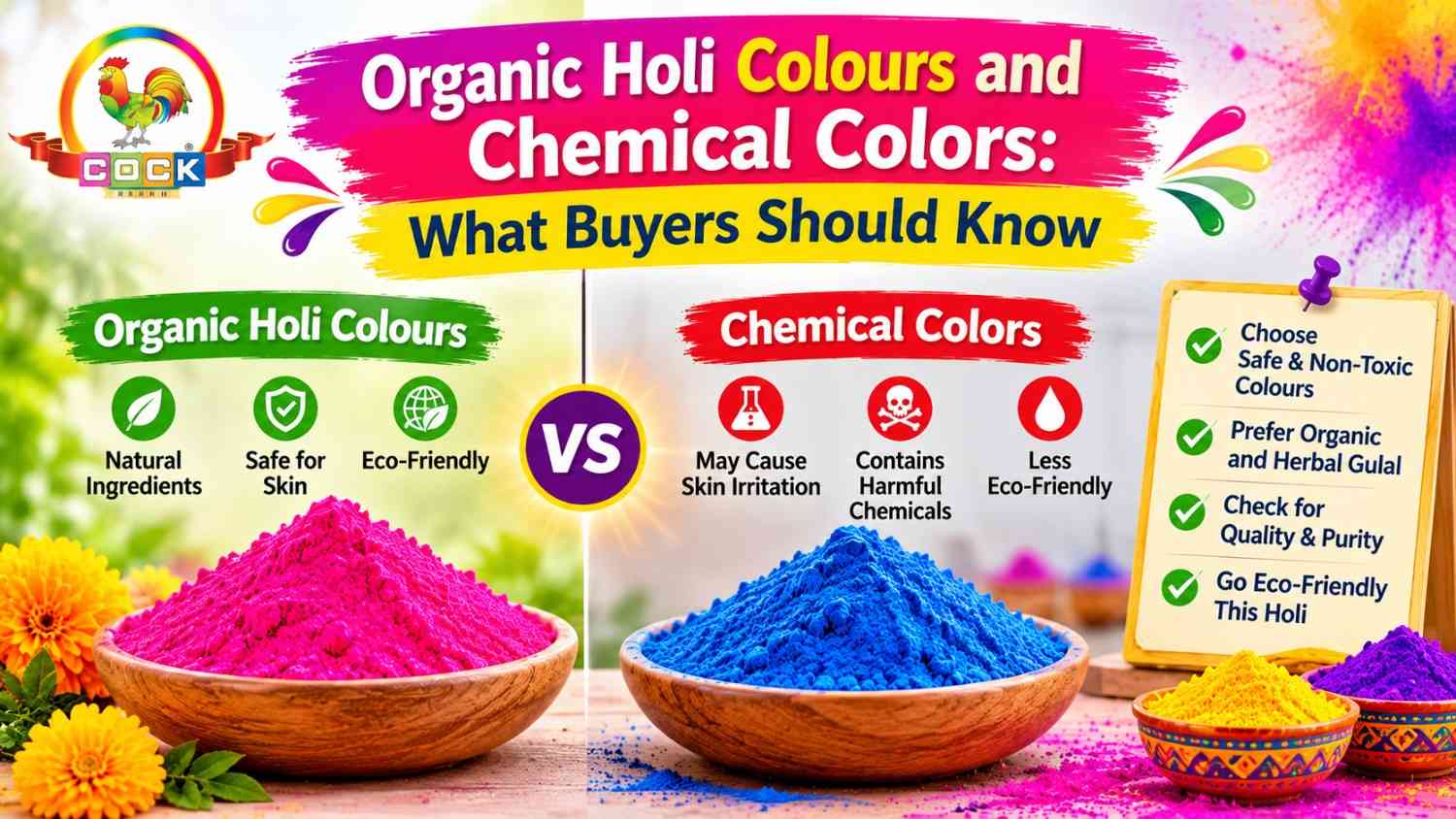
Every year, a few days before Holi, the same question comes up in homes, shops and WhatsApp groups: "Are these colours safe?" It's a fair question. Most of us have a memory of scrubbing green off our face for three days, or a friend whose eyes stayed red long after the party ended. The difference between a good Holi and a painful one often comes down to what's inside the packet.
At Cock Colours, we've been making colours in Hathras since 1951, so we've watched this conversation change over the decades. Buyers today read labels, ask about ingredients and want to know where their Holi colour powder comes from. This guide covers what separates organic Holi colours from chemical ones, how to spot the difference before you buy, and what to look for whether you're shopping for one family or stocking a whole store.
What's the Difference?
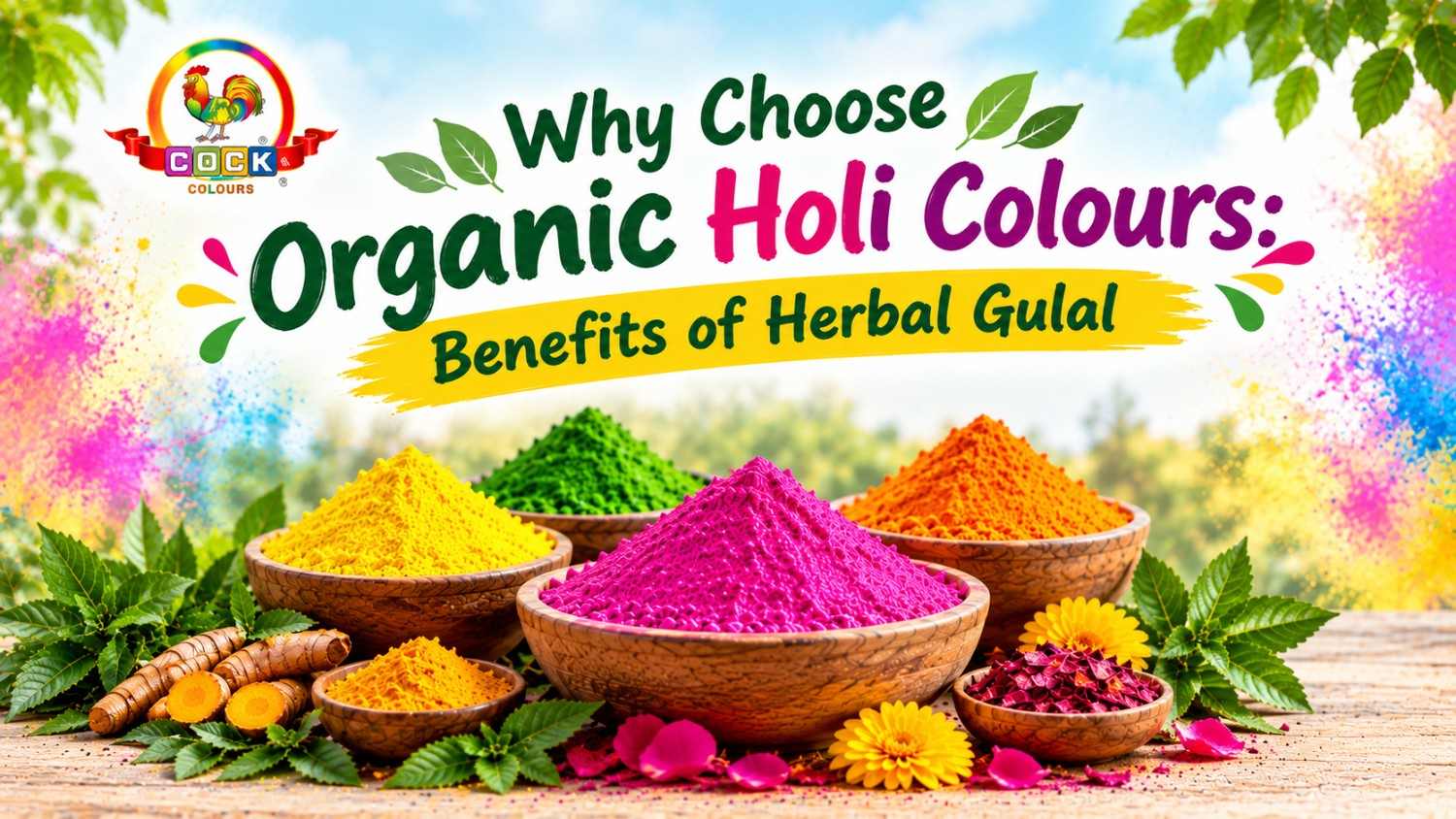
Organic or herbal Holi colours are made mostly from plant-based or food-grade materials such as flower extracts, corn starch, arrowroot and natural pigments. Chemical colours often use industrial dyes, metal oxides and cheap fillers like silica or crushed glass to make the colour brighter and cheaper.
The short version: natural colours are gentler on skin, easier to wash off and kinder to the soil and water they end up in. Chemical colours can look brighter on the shelf, but they carry real risks for skin, eyes and hair.
What Goes Into Chemical Holi Colours?
Not every synthetic colour is dangerous, but the cheapest loose powders sold in open sacks at local markets are where most problems start. Health advisories over the years have flagged ingredients like these in low-quality colours:
- Lead oxide in some blacks, linked to kidney problems
- Copper sulphate in certain greens, which can cause eye allergies
- Chromium iodide in some purples, associated with asthma
- Mercury sulphite in some reds, which is highly toxic
- Silica and glass powder used as cheap fillers
That filler is what causes the scratchy feeling, the tiny cuts on the scalp and the colour that won't leave your skin for days.
What Makes a Holi Colour "Organic" or Herbal?
There isn't one strict legal definition of "organic" for Holi colours in India, which is exactly why buyers need to pay attention. In general, a natural or herbal colour should have:
- A base of corn starch, arrowroot or another food-grade powder instead of silica or sand
- Colour drawn from plant sources (marigold, beetroot, turmeric, henna, spinach, palash flowers) or from cosmetic-grade, skin-safe pigments
- No heavy metals
- A soft, smooth texture that rubs off easily with water
Some brands use "organic" as a marketing word without much behind it. A better test is to ask what the product is made of, who made it and whether the manufacturer can back up the "non-toxic" claim.
How to Tell Safe Colours From Harmful Ones
You don't need a lab to make a reasonable judgement. Before you buy, try these simple checks.
Look at the packaging. Sealed, branded packs with a manufacturer's name, address and batch details are a far better bet than unlabelled loose powder. If no one is willing to put their name on it, that tells you something.
Feel the texture. Rub a pinch between your fingers. Good gulal feels soft and silky, almost like talcum powder. If it feels gritty or sharp, there's likely sand or glass in it.
Check the shine. Metallic or glittery shades are often where heavy metals hide. Matte, soft tones are usually the safer pick.
Smell it. A strong chemical or petrol-like smell is a warning sign.
Do a water test. Mix a little powder into a glass of water. Natural colours dissolve evenly. If you see a layer of shiny particles settling at the bottom, put that packet back.
Read the claims carefully. "Herbal," "eco-friendly," and "skin-safe" should come with some explanation. Look for clear mentions of no heavy metals and of non-toxic, skin-friendly ingredients.
Why the Choice Matters Beyond Your Skin
Holi colour doesn't disappear when the party ends. It goes down drains, into rivers and into the soil. Metals and synthetic dyes stay there and harm plants, fish and the dogs and cows that get splashed during celebrations. Biodegradable, plant-based colours break down far more easily.
Children are the other big concern. Kids play hardest, get colour in their eyes and mouths, and have more sensitive skin, so it's worth paying a little more for a trusted, non-toxic brand.
Organic Colours Aren't Only for Holi
Many families use the same powders well beyond Holi. Diwali, weddings, housewarmings and festival mornings all call for Colour Rangoli at the doorstep. Since Rangoli Designs are made by hand, often by kids and elders sitting on the floor for hours, the same safety rules apply. You want a powder that's smooth, bright and free of anything harsh on the skin.
Good Rangoli powder also needs the right texture to hold sharp lines and fine detail. A finely milled, even-coloured powder makes it easier to draw neat borders, petals and geometric patterns. If you enjoy making Rangoli Designs at home, take a look at the colour range on our shop page, where we stock shades for both Holi and Rangoli.
Temples are another place where colour quality matters. Gulal used in pujas and religious events touches idols, devotees and offerings. Our Temple Gulal range is made with that use in mind.
Buying in bulk? Here's What Retailers Should Ask
If you run a shop or plan corporate events, one bad batch can mean complaints and lost trust. Ask suppliers how long they've been manufacturing, whether their colours are free from heavy metals, and whether they can keep shades consistent and stock moving during the festive rush.
We work with a large network of dealers and distributors across India. If you want to stock safe colours this season, you can become a dealer or send us a dealer inquiry. For large international orders, see our bulk export options, and if you're planning festive hampers for clients or staff, our corporate gifting team can help.
Why Buyers Trust Cock Colours
We've been making colours for over seven decades, and in that time we've grown to more than 250 shades sold across India and in countries including the USA, UK, Canada and Australia. Our Holi colours are made to be non-toxic, skin-friendly and free from heavy metals, with a focus on eco-friendly materials that break down naturally.
You can read more about our journey on the About Us page, or see why families and businesses choose us.
Final Thoughts
Holi is meant to be about joy, colour and coming together, not rashes, itchy eyes and polluted water. The good news is that choosing safer colours isn't hard. Buy from a brand you trust, check the texture and smell, skip anything shiny or unlabelled, and pick plant-based or non-toxic powders whenever you can.
Got questions about our products? Get in touch with us. We're always happy to help.
Frequently Asked Questions
1. What is the difference between organic and chemical Holi colours?
Organic colours use plant-based or food-grade ingredients, while chemical colours often contain synthetic dyes and metals. Cock Colours make non-toxic, skin-friendly colours free from heavy metals.
2. Are organic Holi colours safe for children?
Yes, good-quality natural colours are much gentler on young skin. Cock Colours designs its Holi colour powder to be safe and non-toxic for all ages.
3. How can I check if Holi colour powder is safe?
Check for a sealed branded pack, a soft texture and no metallic shine or strong smell. Cock Colours packs carry full manufacturer details.
4. Do organic Holi colours wash off easily?
Most natural colours come off with plain water and mild soap. Cock Colours shades are made to wash off without harsh scrubbing.
5. Can I use Holi colours for Colour Rangoli?
Yes, many smooth, fine powders work well for Rangoli Designs too. Cock Colours offer shades suited to both Holi and Rangoli.
6. Where can I buy safe Holi colours in bulk?
You can order through the Cock Colours dealer network, or use our bulk export service for large and international orders.
7. Are Cock Colours products eco-friendly?
Yes. Cock Colours uses eco-friendly, biodegradable materials that are kinder to soil, water and animals.